
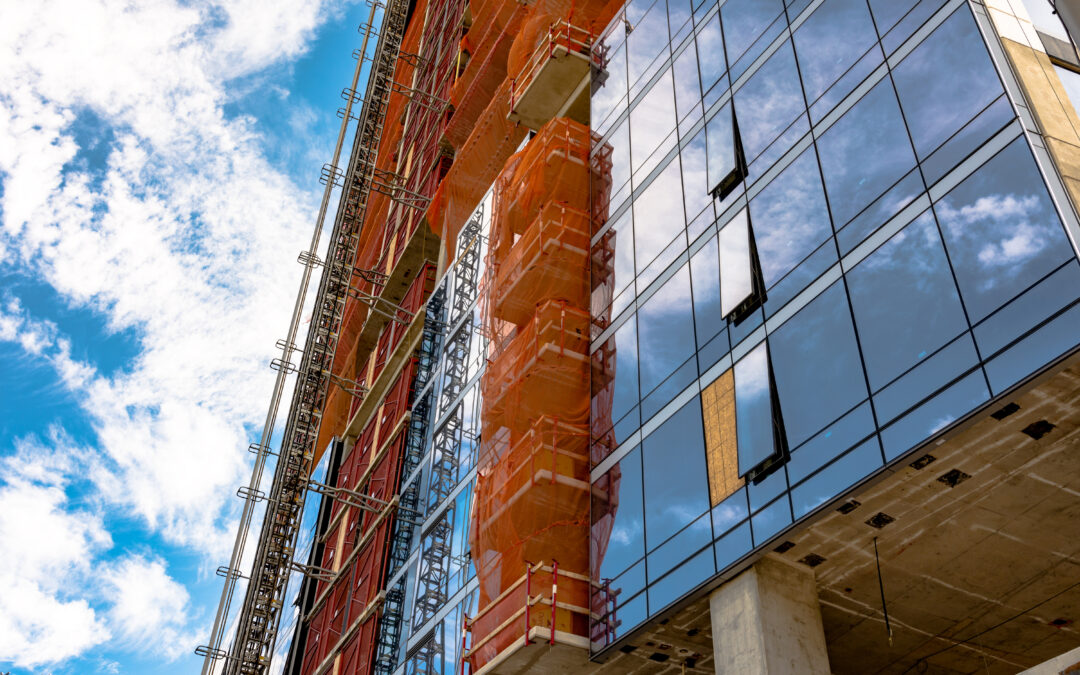
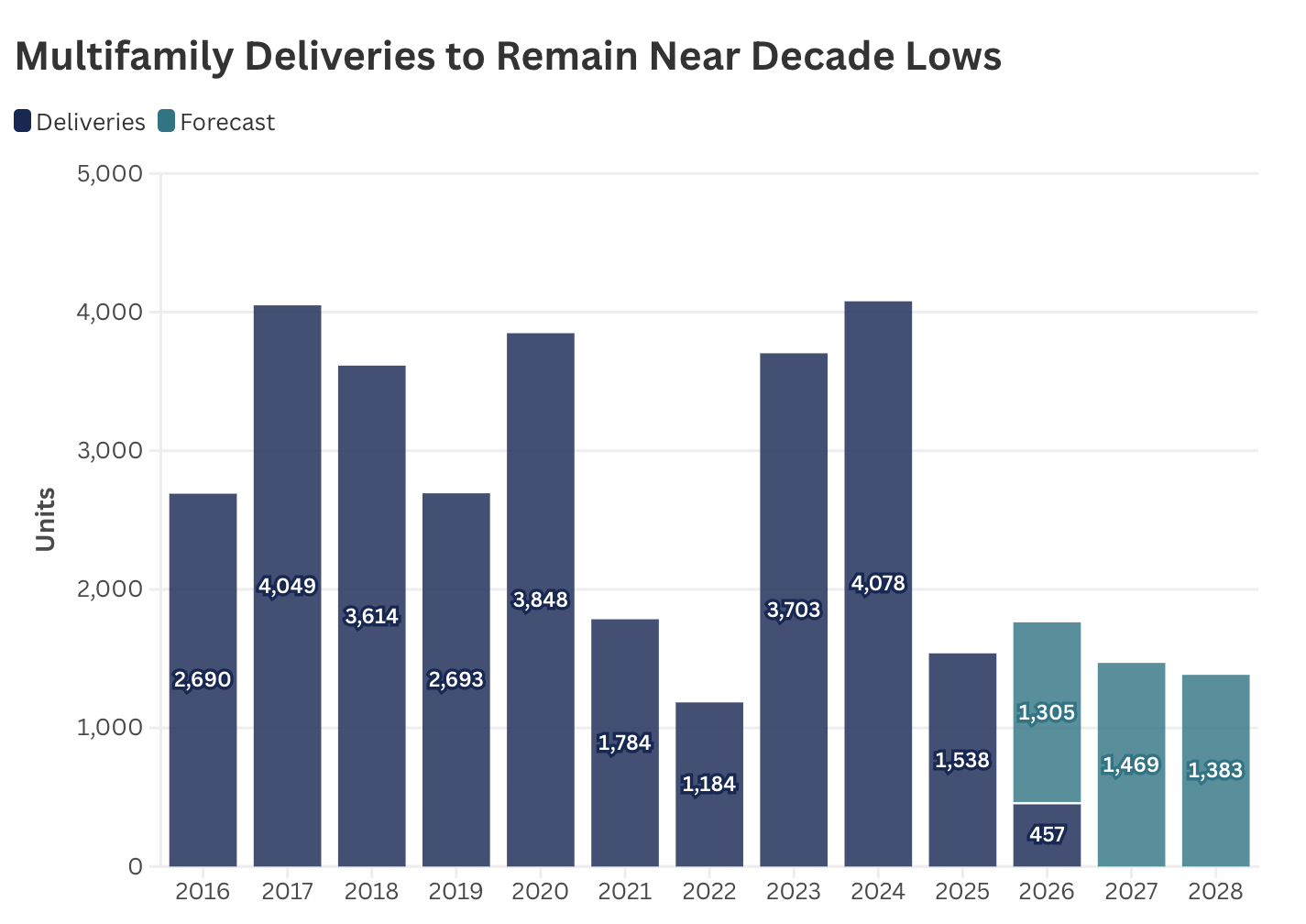
Baltimore’s multifamily market is beginning to move beyond the construction surge that reshaped the region over the past several years. After a historic wave of deliveries in 2023 and 2024, development activity has slowed sharply, with fewer units under construction and permitting levels falling well below long-term norms. While some counties are still absorbing recent supply, the broader pipeline is becoming more constrained, setting the stage for a different phase of the market.
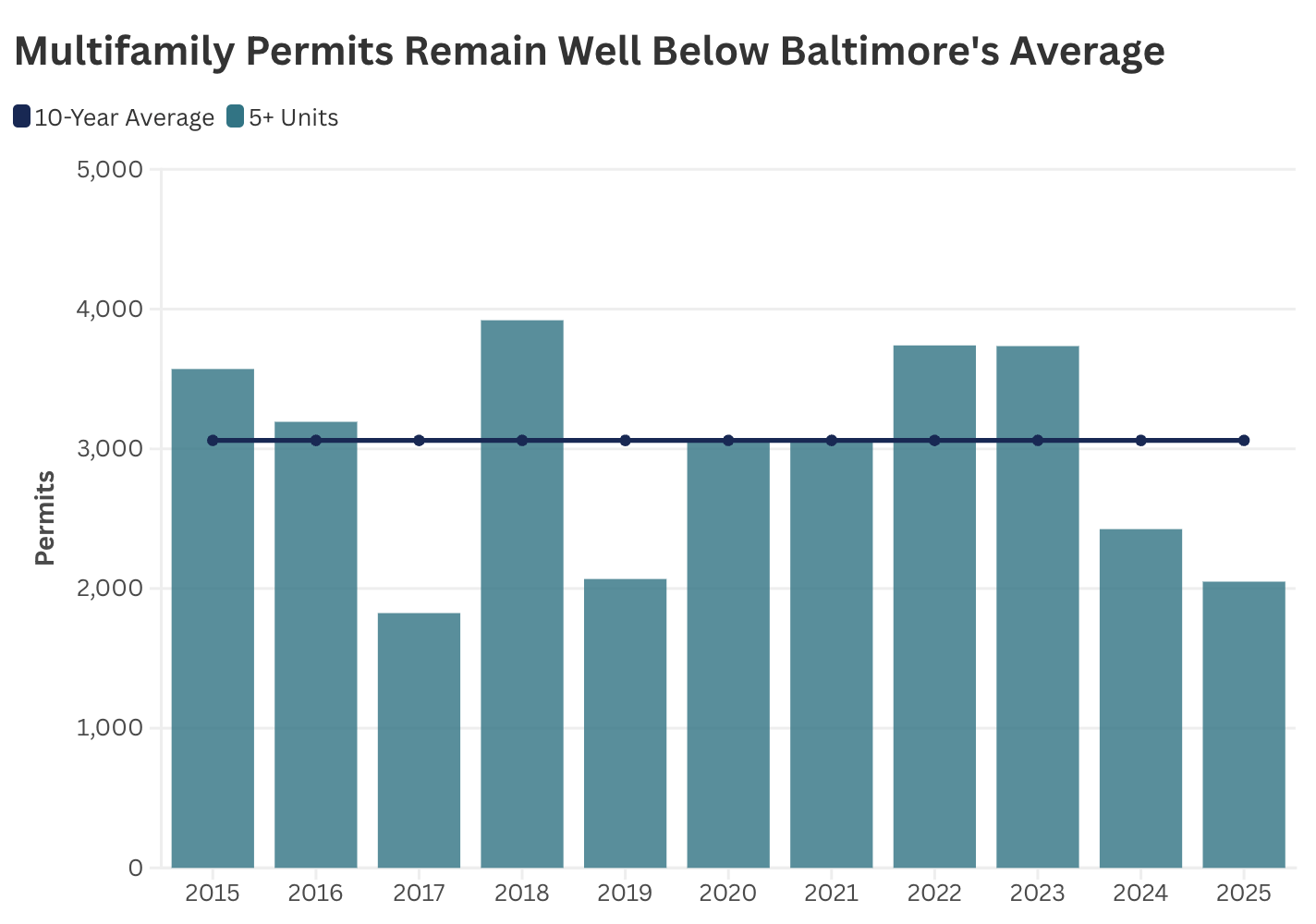
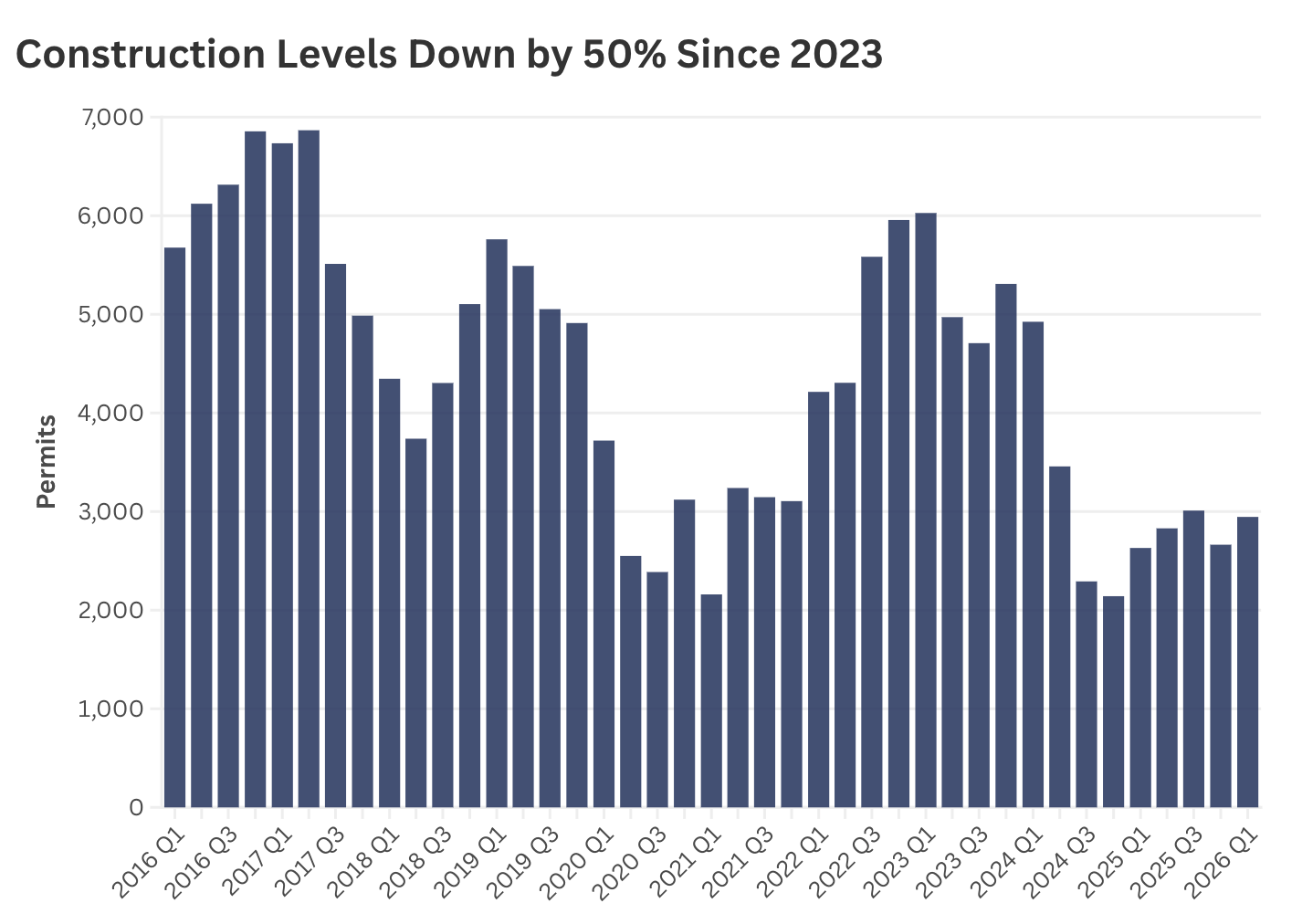
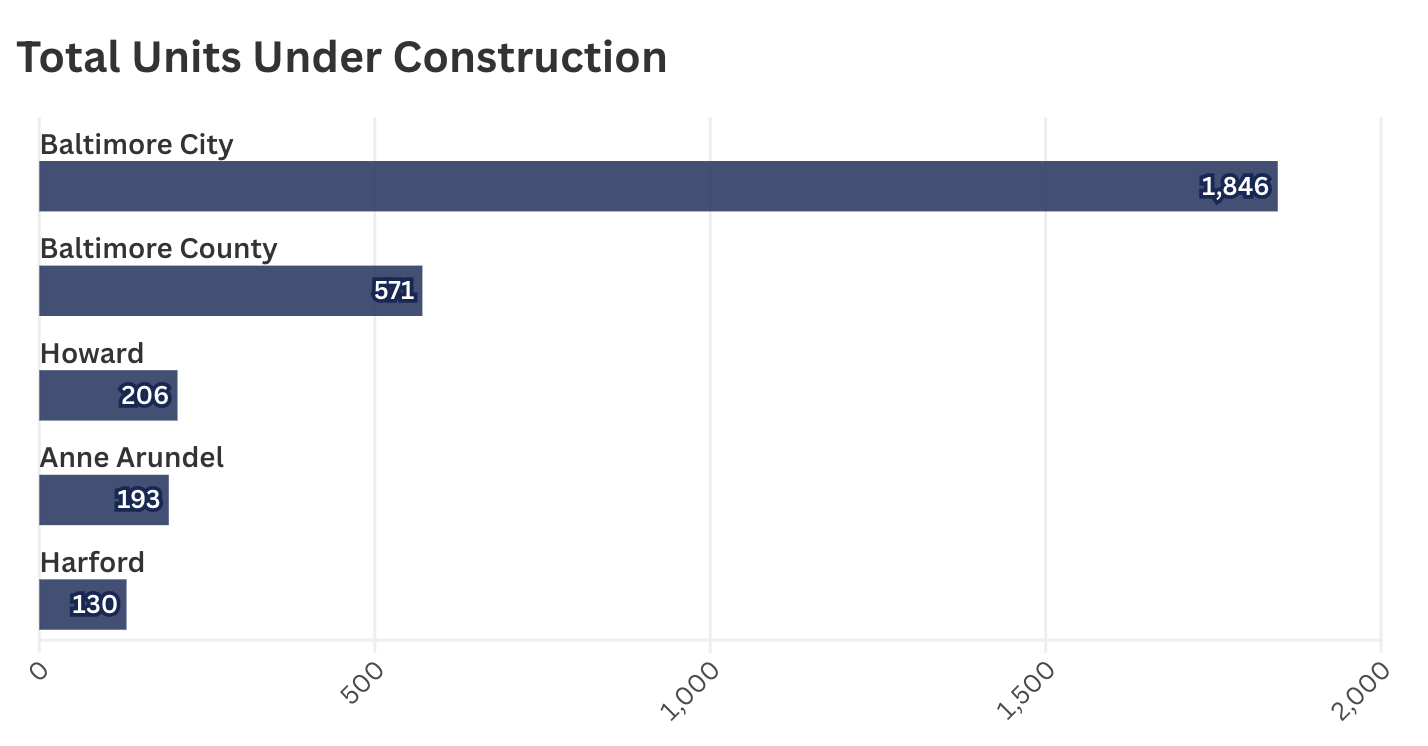
The recent pullback is significant. Fewer than 3,000 units remain under construction across the Baltimore Metro, representing a decline of more than 50% from peak levels in 2023. At the same time, annual permitting has fallen well below the region’s long-term average, reinforcing the view that the next few years should bring less supply pressure than the market has faced recently. Higher interest rates, tighter lending standards, and rising construction costs have all contributed to a more cautious development environment.
Source: U.S. Census Bureau
Source: CoStar
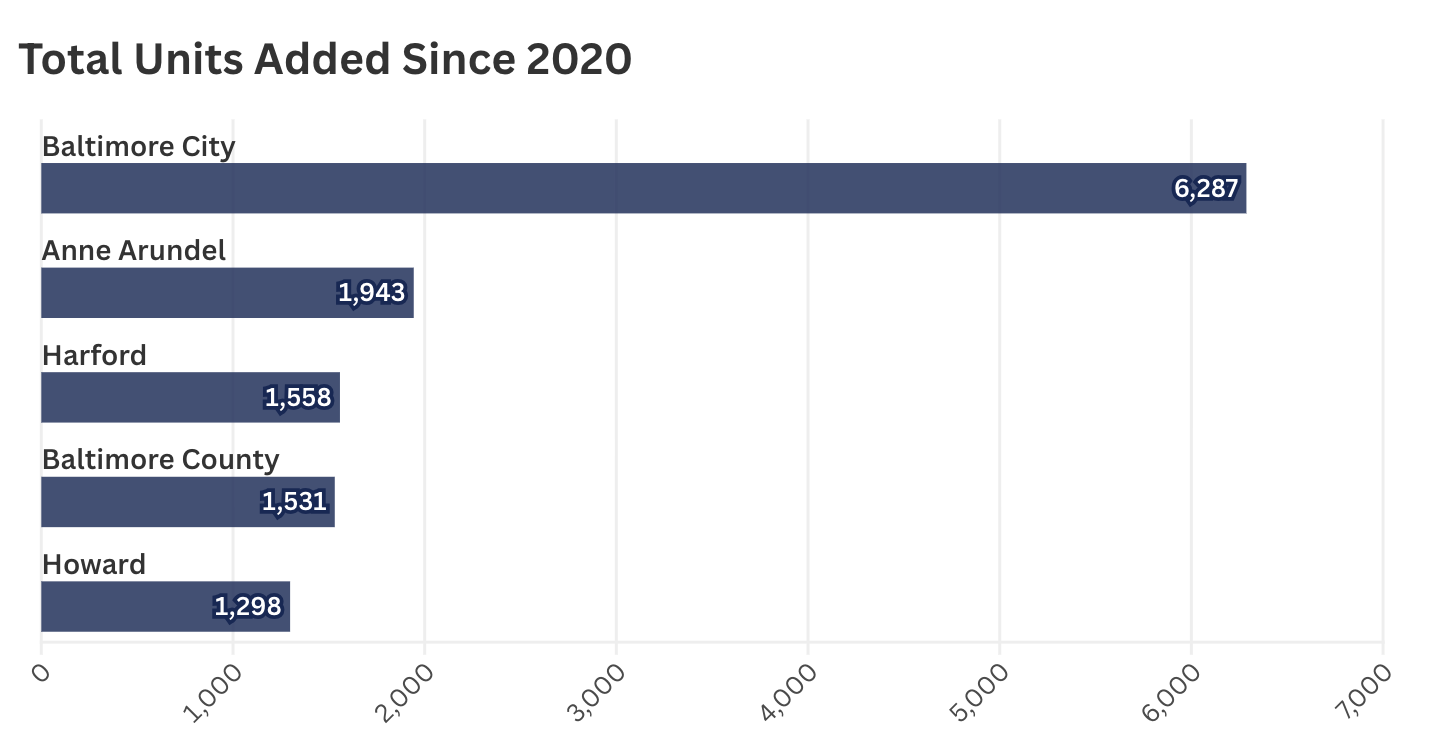
That does not mean supply pressure has disappeared everywhere. Baltimore City still carries the largest share of active development and remains the most competitive operating environment in the metro. Core urban submarkets such as Downtown, Canton, and Federal Hill continue to absorb a significant amount of newly delivered product, creating more lease-up pressure and greater reliance on concessions, particularly in newer Class A communities. Anne Arundel County is also still working through the impact of its recent construction surge. After more than 1,000 units were delivered in 2024, some of the county’s newer projects are still offering concessions as the market absorbs that supply, especially in areas around Annapolis.
Other parts of the region look very different. Baltimore County has remained relatively insulated from the broader supply wave, with inventory growth staying below 0.5% annually in each of the past four years. That limited new supply has helped support one of the metro’s more stable multifamily environments. Howard County has also seen near-term supply pressure ease, with no new deliveries in early 2026 and only a modest number of units currently under construction. Together, these suburban counties are positioned to benefit the most from a more constrained development backdrop.
Source: CoStar
Source: CoStar
In the near term, recently delivered product in supply-heavy submarkets may continue to face lease-up pressure. Over the longer term, however, a thinner development pipeline should help reduce competition from new supply and create a more favorable environment for occupancy and rent growth, especially in areas where development has remained limited.
Looking ahead, Baltimore’s supply outlook is becoming increasingly constrained. Annual deliveries are projected to remain near decade lows through at least 2028, as the sharp decline in construction activity and subdued permitting pipeline limit the number of new projects moving forward. While recent deliveries will continue to shape conditions in a few submarkets, the broader development wave is clearly losing momentum. Over time, that should help reduce supply pressure and support firmer apartment fundamentals across much of the metro.
Source: CoStar