Key Takeaways:
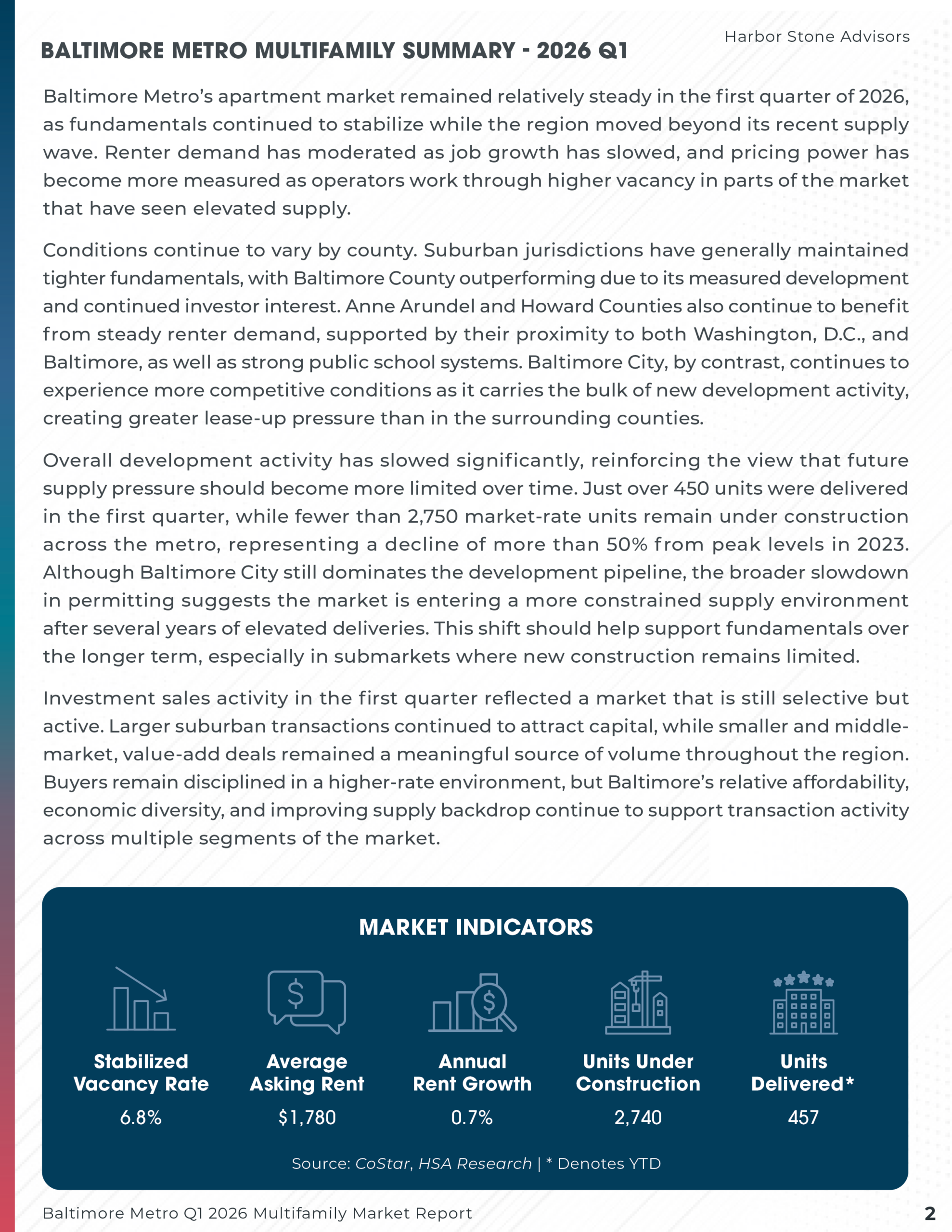
Supply Pressure Is Easing: Development activity has slowed significantly across the Baltimore Metro, with fewer than 2,750 market-rate units under construction, down more than 50% from peak levels in 2023.
Conditions Vary by County: Baltimore City continues to face the most lease-up pressure due to recent deliveries, while Baltimore County and Howard remain more insulated thanks to limited near-term supply. Anne Arundel is still working through its 2024 construction surge.
Sales Activity Shows Momentum: Investment activity remained active in the first quarter, supported by larger suburban transactions and continued demand for smaller and middle-market value-add opportunities across the region.
Baltimore’s Multifamily Development Wave Eases
Baltimore Metro’s multifamily market remained relatively steady in the first quarter of 2026, as the region continued to move beyond its recent supply wave. After several years of elevated deliveries, fundamentals are beginning to stabilize, though conditions remain uneven across counties and submarkets. Renter demand has moderated as job growth has slowed, and pricing power has become more measured as operators work through higher vacancy in areas that have seen significant new construction.
The broader economic backdrop has softened entering 2026. Total nonfarm employment declined year over year, while unemployment moved higher, creating a more cautious environment for apartment demand. However, the region continues to benefit from a large and diverse employment base, with education and health services remaining a key source of stability. This sector now represents a major share of the Baltimore Metro economy and continues to support renter demand in submarkets tied to major institutions such as Johns Hopkins, GBMC, Towson University, MedStar, and Sinai Hospital.
Development activity remains one of the most important themes shaping the market. Just over 450 units were delivered in the first quarter, while fewer than 2,750 market-rate units remained under construction across the metro, representing a decline of more than 50% from cyclical highs in 2023. Permitting activity also remains well below long-term averages, suggesting that future supply pressure should become more limited in the years ahead. This shift should gradually help stabilize occupancy and improve rent growth potential, especially in areas where new construction has already remained limited.
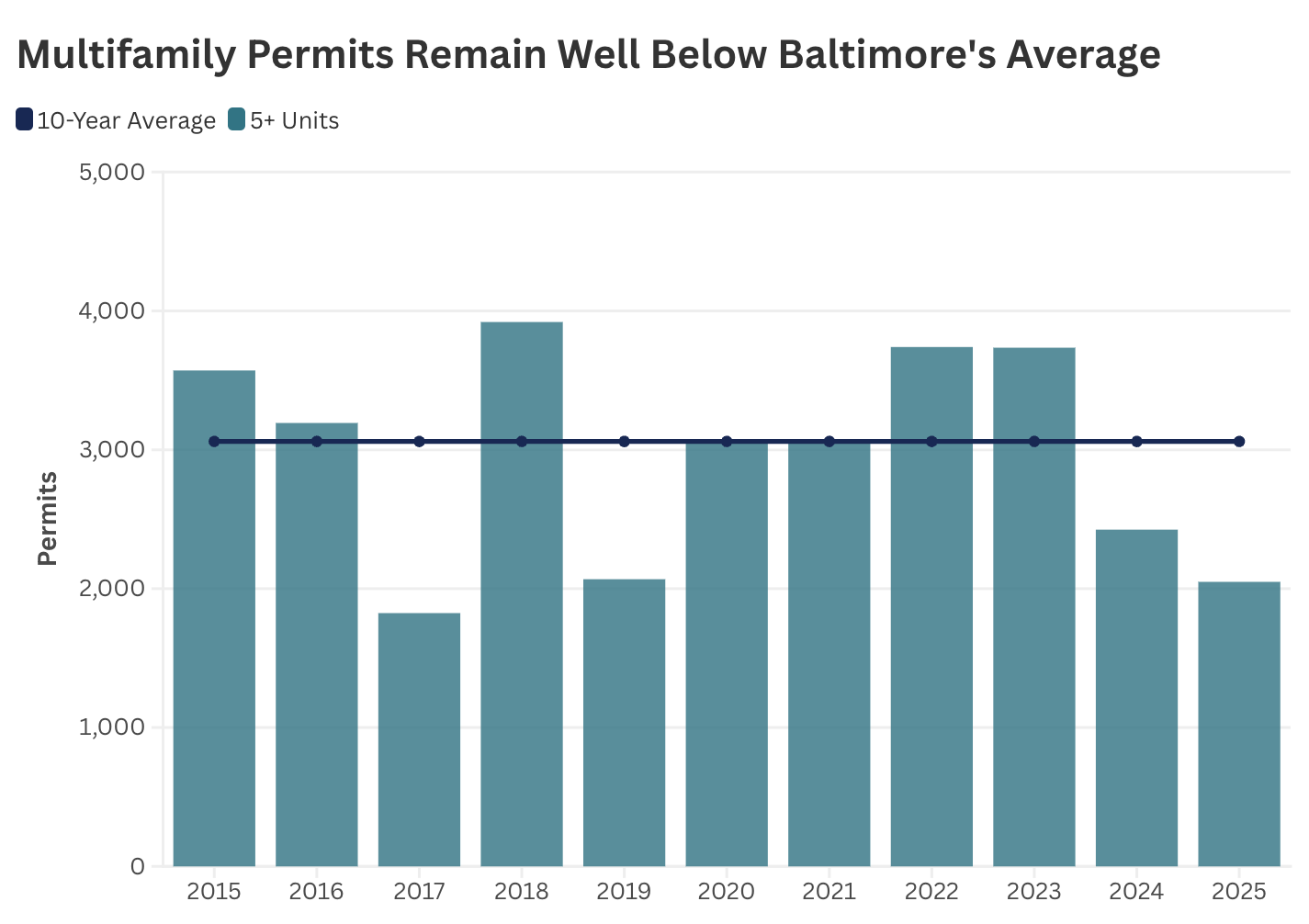
Source: U.S. Census
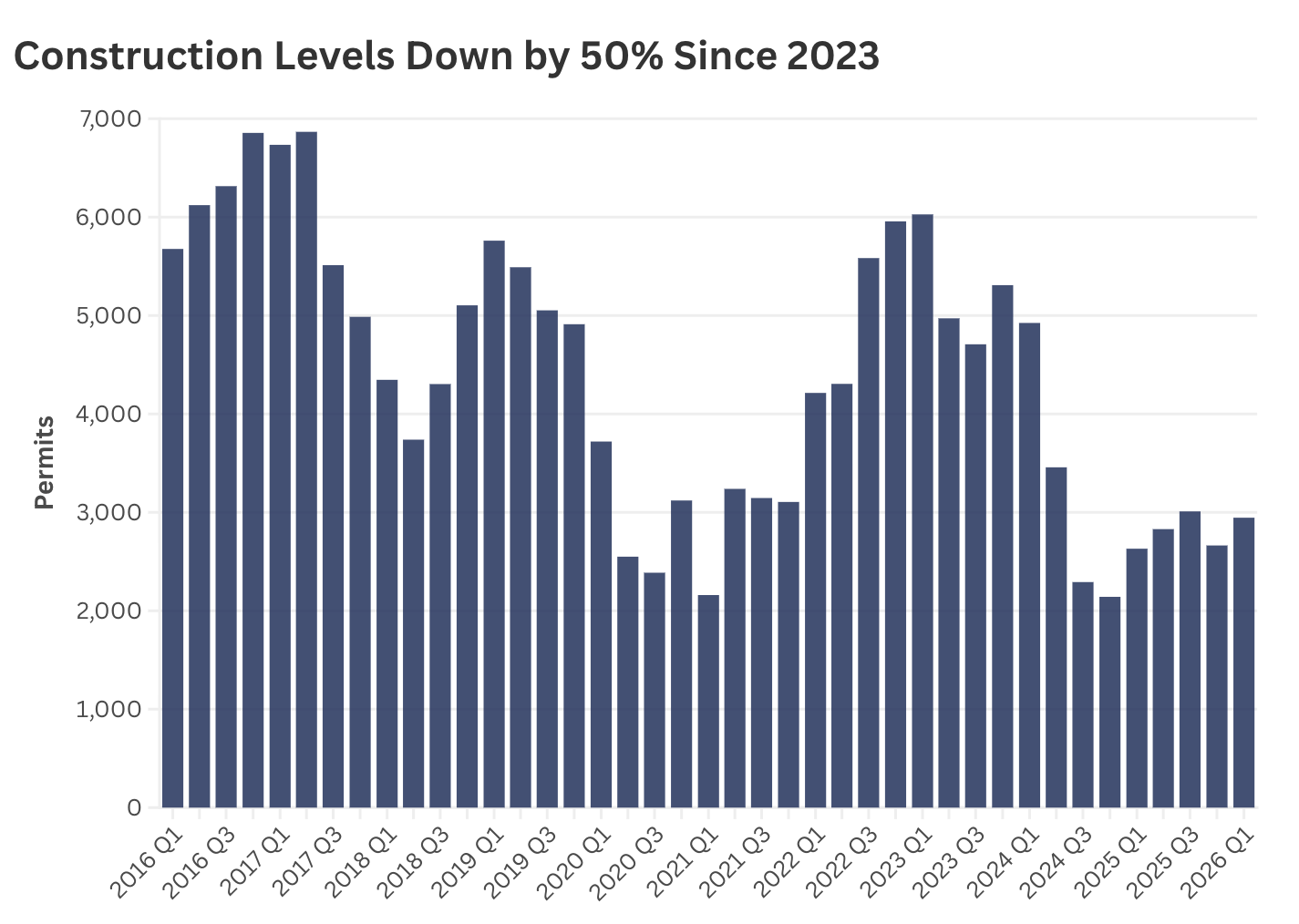
Source: CoStar
Performance continues to vary by county. Baltimore County remains one of the metro’s most stable markets, supported by limited new supply, steady renter demand, and continued investor interest. Baltimore City remains the center of development activity and continues to experience the most competitive leasing environment, particularly in core urban submarkets with newer Class A product. Anne Arundel County is still working through a recent construction surge, while Howard County continues to benefit from premium suburban fundamentals and limited near-term supply. Harford and Carroll remain smaller apartment markets, with Harford seeing targeted growth around Bel Air and the I-95 corridor, while Carroll remains more supply-constrained.
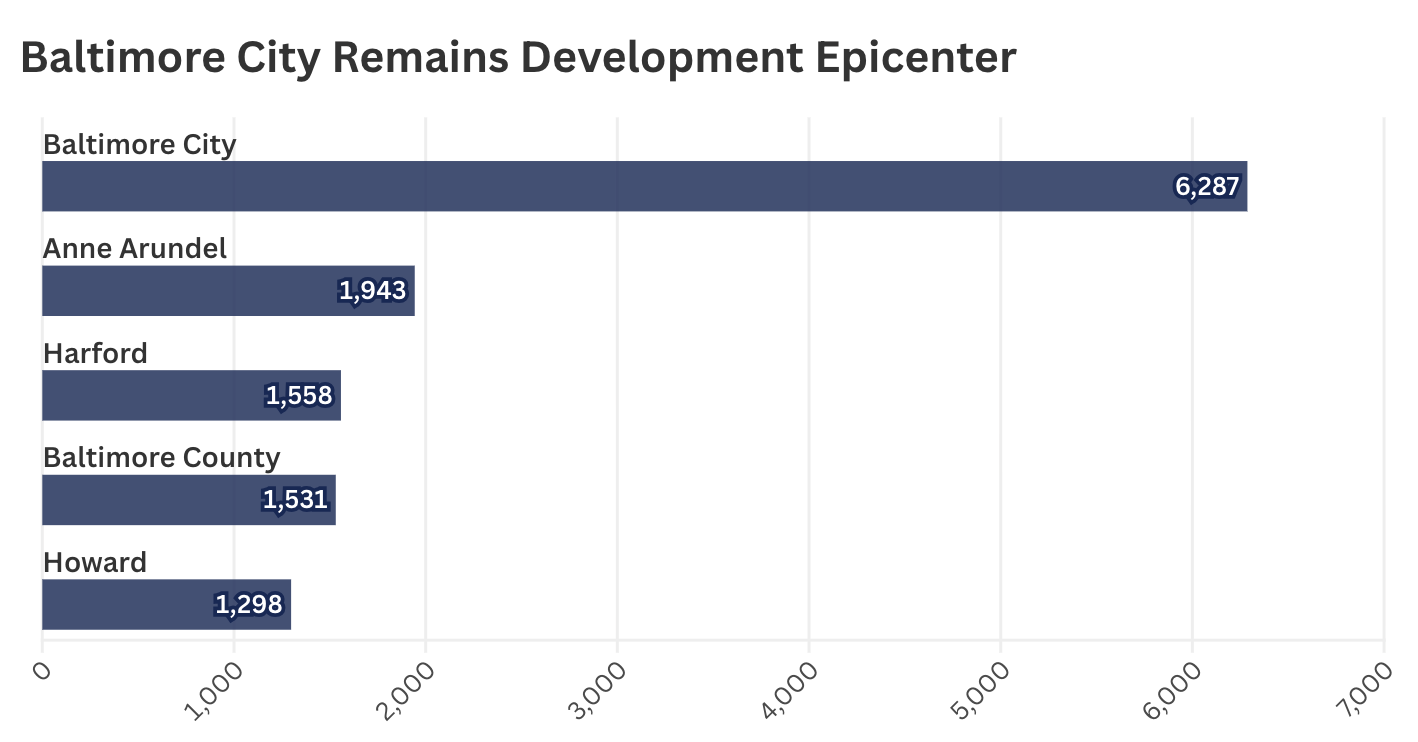
Source: CoStar | *Total Units Delivered Since 2020
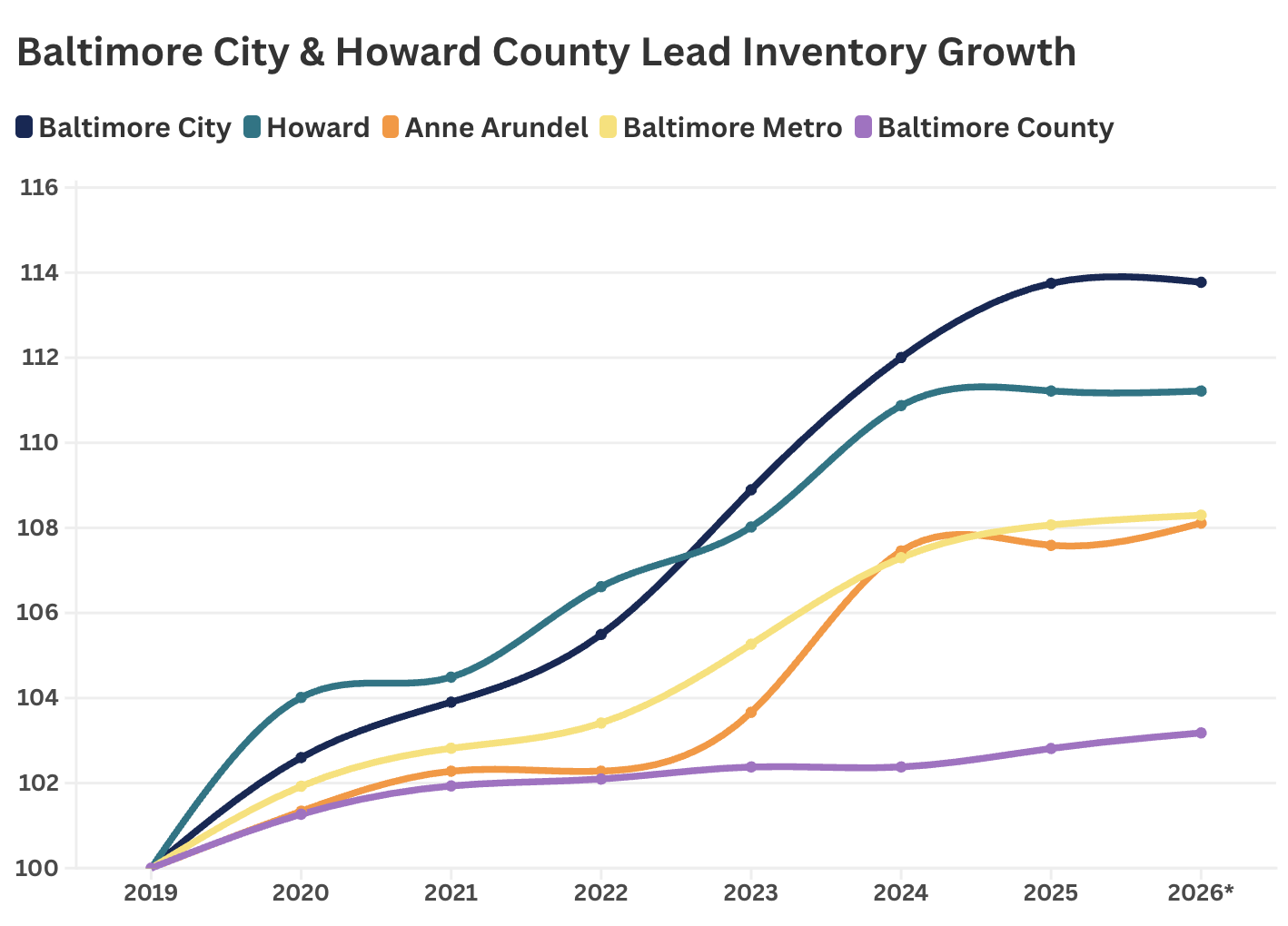
Source: CoStar | *Cumulative Inventory Growth Indexed to 2019
Investment sales activity remained selective but active in the first quarter. Larger suburban transactions continued to attract capital, while smaller and middle-market value-add deals remained a meaningful source of volume. Buyers remain disciplined in a higher-rate environment, but Baltimore’s relative affordability, economic diversity, and improving supply outlook continue to support transaction activity across multiple segments of the market.
Overall, the Baltimore Metro is entering a more balanced phase. While recent supply is still being absorbed in certain submarkets, the development pipeline is thinning, county-level fundamentals are diverging, and investor interest remains focused on locations with durable demand drivers and limited future supply.